Silver has held an important place in pooja rituals for centuries. It’s valued not only for its beauty but also for its spiritual significance, symbolizing purity and positive energy. Choosing the right silver items ensures that family traditions are respected and preserved with care. This guide will help you find silver pooja items that suit your family’s needs while honoring deeper cultural meanings.
Table of Contents
Significance of Silver in Pooja Rituals
Silver holds a unique place in pooja ceremonies, bridging tradition and spirituality. Its use goes beyond decoration; silver symbolizes purity and protection in many Indian households. Understanding its role helps you appreciate why selecting the right silver pooja items reflects respect for long-standing family customs.
Cultural Importance Across Regions
In India, silver’s presence in worship varies but remains significant across many cultures. For example:
- In South India, silver plates called thaliy hold sacred offerings during festivals and weddings.
- In North Indian homes, silver bowls and lamps often play a central role in daily prayers and special rituals.
- Regions like Rajasthan and Gujarat use intricately designed silver idols and utensils during pooja, emphasizing craftsmanship passed through generations.
- In Bengal, silver ornaments are gifted during religious ceremonies as symbols of blessings and prosperity.
Each region’s approach differs slightly, but the common thread is silver’s role as a pure, auspicious metal that enhances the sanctity of any ritual.
Spiritual Benefits of Silver in Worship
Silver is believed to carry powerful spiritual qualities, which is why it is favored over other metals. Here’s why many consider silver essential for pooja items:
- Purity: Silver naturally resists corrosion and retains its shine, symbolizing clarity and cleanliness in worship.
- Energy Conductor: It is said silver attracts and reflects positive energies, helping to cleanse the environment and uplift the spirit.
- Protection: Many trust silver to guard against negative forces during pooja, creating a safe space for prayer.
- Medicinal Properties: Traditionally, silver is thought to have health benefits, which adds to its spiritual value during rituals focused on well-being.
Choosing silver isn’t just about tradition; it’s about the belief that this metal connects the physical and spiritual worlds in a clean, protective way. This makes every silver pooja item not just beautiful, but meaningful.
Essential Silver Pooja Items for Family Worship
When setting up a pooja space, selecting the right silver items adds both spiritual meaning and beauty. Silver objects are not only traditional but also bring a sense of calm and purity to family worship. Each item plays a specific role that supports the flow of the ritual and reflects deep cultural symbolism. Here’s a look at the most commonly used silver pooja items and their importance in daily and special prayers.
Silver Diyas and Lamps: Purpose in Rituals and Symbolism of Light
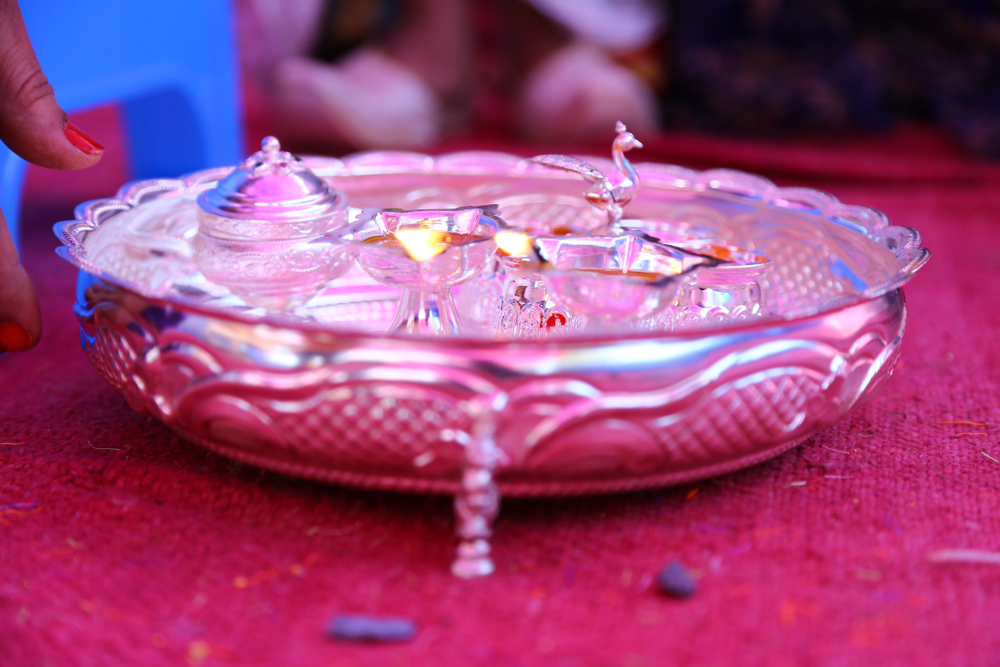
Silver diyas and lamps are among the most significant accessories in pooja ceremonies. Lighting a silver diya symbolizes the triumph of light over darkness and knowledge over ignorance. The soft glow of a silver lamp creates a serene atmosphere, helping the mind focus during prayer.
Their reflective surface amplifies the flame’s brightness, representing the spread of positive energy throughout the home. Beyond decoration, silver diyas are practical—they do not react with ghee or oil, ensuring safe and clean lighting. Many families use them every day to mark the start of prayers, making them an indispensable part of worship.
Silver Plates and Bowls: Used for Offerings (Prasad), Aarti Thali, and Their Benefits
Silver plates and bowls serve multiple functions in a pooja. They hold offerings such as fruits, sweets, and flowers, which are presented to the deity. These offerings, called prasad, are later shared among family members as a blessing.
An aarti thali—a silver plate for pooja with small containers and a holder for incense sticks or diyas—is essential during the aarti ritual. The silver surface keeps the thali looking pure and helps contain the offerings cleanly.
Using silver for these items has practical and spiritual benefits: it is hypoallergenic, easy to clean, and believed to maintain the sanctity of prasad by keeping it free from impurities. Silver also symbolizes generosity and respect for the divine, making these items an ideal choice.
Silver Kalash and Pots: Role in Water Holding Rituals and Symbol of Life and Prosperity
The silver kalash (pot) is a key vessel in many worship ceremonies. It typically holds water, symbolizing life and purity. During rituals, the kalash is filled with water, often topped with mango leaves and a coconut, representing creation and fertility.
Silver kalashes are appreciated for their durability and reflective surface, which signifies the clarity of the soul. They are used to sprinkle holy water (achamanam) or to invoke blessings at the start of pooja. Carrying water in a silver pot is believed to attract positive vibrations and prosperity.
Using a silver kalash connects the family with natural elements and ancestral rituals, making it a cornerstone of worship.
Silver Incense Holders and Bells: Importance in Creating a Sacred Atmosphere and Calling Divine Presence
Incense holders and bells made of silver add sensory depth to the worship space. The subtle fragrance from incense cleanses the environment, while the silver holder lends an elegant, stable base. Silver’s resistance to tarnish ensures clean use without altering the scent.
Ringing a silver bell signals the start of pooja and invites the divine presence into the home. Its clear, sharp tone helps devotees concentrate and marks moments of spiritual importance. The sound is believed to dispel negative energy and focus the mind on prayer.
Together, silver incense holders and bells complete the pooja experience by engaging smell and sound, creating a peaceful, sacred setting for family worship.
Factors to Consider While Choosing Silver Pooja Items
Selecting silver pooja items for your family goes beyond just picking pretty pieces. It involves careful thought about purity, design, size, and cost. These factors affect not only the look of your home altar but also the spiritual value and practical use of the items. Paying attention to these details can help you find silver pooja items that honor your traditions and serve your family well for years.
Purity and Authenticity of Silver: How to Verify Silver Quality
Purity is the foundation when purchasing silver pooja items. High-quality silver means fewer impurities, which supports spiritual cleanliness during worship. You can check the purity by looking for official hallmarks stamped on the items. Common marks include:
- 925 or 92.5%, indicating sterling silver.
- 999 or 99.9%, which is pure silver.
These marks assure you that the silver meets recognized standards. Avoid items without clear hallmarks or those that seem unusually lightweight or cheap; they might be silver-plated or mixed with other metals.
Spiritually, pure silver is believed to carry positive energy and maintain vibrancy during rituals. Impure metals may dull or trap negative energy, which clashes with the intention behind pooja. Choosing authentic silver respects the sacred nature of your worship space and supports the flow of blessings.
Design and Craftsmanship: Choosing Styles That Suit Your Family’s Tradition and Aesthetic Preferences
Design matters just as much as purity. Each family’s tradition shapes which styles fit best. For example, some households favor simple, sleek patterns—understated and elegant—while others prefer intricate carvings and traditional motifs. Take note of:
- Regional influences like floral patterns in South India or geometric shapes common in western India.
- The style of other pooja items you own, to keep a cohesive look.
- Your family’s tastes—do you prefer classic, modern, or a mix?
Craftsmanship affects both beauty and durability. Well-crafted pieces hold up better through frequent use and cleaning. Look closely at the finishing, engraving clarity, and sturdy construction. A finely made silver item not only looks appealing but signals respect for tradition and pride in your family’s heritage.
Size and Usability for Daily or Special Occasions
Silver pooja items come in various sizes, and picking the right one depends on where and how often you’ll use them. Large lamps or bowls may be perfect for special festivals but can be bulky for daily rituals. Smaller items are easier to handle and clean, ideal for everyday worship.
Consider these points:
- The size of your designated pooja space.
- How many people take part in the rituals.
- Storage options, especially if you need to keep items safe when not in use.
Choosing the right size enhances the flow of your rituals and keeps your altar neat and manageable. It also prevents items from being underused or crowded into tight spaces.
Budget and Long-Term Value: Balancing Cost with Quality and Potential Heirloom Importance
Setting a budget helps narrow down choices without sacrificing quality. Silver items come at different price points depending on purity, weight, and craftsmanship. While it may be tempting to opt for cheaper options, investing in quality usually brings better long-term value.
Think of these investments as more than just pooja tools—they often become family heirlooms passed down through generations. Durable, well-made silver can retain or grow in value over time. It’s wise to:
- Compare prices based on silver content, not just size or design.
- Avoid very low-cost items that might not last or maintain purity.
- Prioritize items you anticipate using often or gifting within the family.
Balancing your budget with these factors makes your silver pooja purchases meaningful both now and in the future. It ensures you buy pieces that serve your family’s spiritual practice while honoring tradition and quality.